
Get Support
02 9822 0155
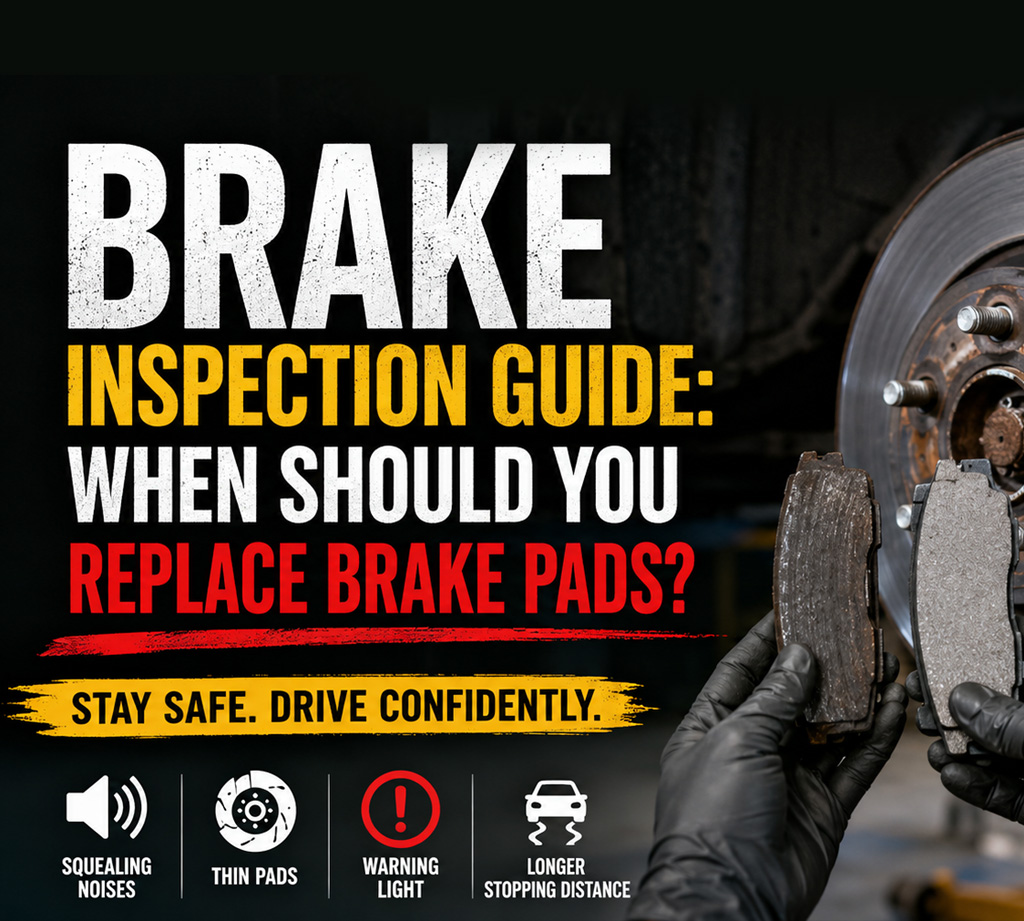
Brake Inspection Guide: When Should You Replace Brake Pads?
Have you ever rolled down your window at a stoplight and heard an annoying squealing noise coming from your car? Most drivers have experienced that moment of wondering, “Is that my brakes, or is it someone else’s vehicle?”
Sometimes it’s nothing serious. Other times, it’s your car’s way of telling you that your brake pads are nearing the end of their life.
The truth is that brake pads don’t usually fail overnight. They wear down gradually, giving you several warning signs before they become a real safety concern. The problem is that many drivers either don’t recognize those signs or put off dealing with them because the car still seems to stop normally.
I’ve spoken with vehicle owners who ignored a slight squeak for months, only to discover later that they needed not only new brake pads but also new rotors. What could have been a relatively inexpensive repair turned into a much bigger bill.
That’s why understanding brake pad wear is so important. A little knowledge can save you money, improve your vehicle’s performance, and most importantly, keep you safer on the road.
Brake Pads: Small Parts with a Big Job
Most people don’t think about their brakes until something feels wrong.
Every time you press the brake pedal, a set of brake pads presses against metal rotors attached to your wheels. The friction created between the pads and rotors slows the vehicle down.
It’s a simple concept, but it’s happening constantly. Whether you’re driving through downtown traffic, heading out on a road trip, or stopping at your neighborhood grocery store, your brake pads are working every single time you touch the brake pedal.
Because of that constant use, wear is inevitable.
Think of brake pads like the soles of your favorite shoes. The more you use them, the more material gradually disappears. Eventually, there’s not enough left to do the job effectively.
How Long Should Brake Pads Last?
This is one of those questions mechanics hear all the time, and the honest answer is: it depends.
Two people can drive the exact same vehicle and get completely different lifespans from their brake pads.
For example, a driver who spends most of their time cruising on highways may get tens of thousands of additional miles compared to someone who battles city traffic every day. Constant stopping and starting puts far more stress on the braking system.
Driving habits matter too.
If you’re the type of driver who brakes hard at the last second before every traffic light, your brake pads will wear out much faster than someone who anticipates traffic and slows down gradually.
Typically, the majority of brake pads will last anywhere from 25, 000 to 70, 000 miles. The range is pretty big, so that’s the main reason why it’s more reliable to check them regularly than to depend on mileage only.
The First Warning Sign Most Drivers Notice
For many people, the first clue that something isn’t right is a squealing noise.
Modern brake pads are often designed with wear indicators that create a high-pitched sound when the pad material becomes thin. It’s not there to annoy you—it’s there to get your attention.
A brief squeak after rain or on a cold morning isn’t necessarily a problem. However, if the noise becomes consistent every time you brake, it’s worth having the system checked.
Ignoring that sound is a bit like ignoring a smoke alarm because dinner isn’t burning yet. The warning is there for a reason.
When Grinding Means Trouble
A squeal is a warning.
Grinding is often a problem that’s already progressed.
When brake pads wear down completely, the metal backing plate can start making direct contact with the rotor. That’s when you’ll hear a rough grinding sound that usually makes drivers cringe instantly.
At that point, you’re no longer just replacing brake pads. You may also be looking at rotor repairs or replacement.
That’s why most technicians recommend addressing brake issues while they’re still in the warning stage rather than waiting until the damage becomes more extensive.
A Simple Visual Check Anyone Can Do
You don’t need to be a mechanic to perform a basic brake inspection.
The next time your vehicle is parked, take a look through the openings in the wheel. With a flashlight, you can often see the brake pad sitting against the rotor.
If the friction material looks extremely thin, it’s probably time for a professional inspection.
Even if everything appears normal, making this quick check part of your regular vehicle routine can help you catch problems early.
Conclusion
Brake pads aren’t the most exciting part of vehicle ownership, but they’re one of the most important.
Pay attention to unusual sounds, changes in braking performance, vibrations, or warning lights. Don’t assume that because your car still stops, everything is fine.
A brake inspection takes very little time, and replacing worn pads early can prevent larger repair bills down the road.
More importantly, it helps ensure that when you need your brakes most, they’re ready to do their job.
