
Get Support
02 9822 0155
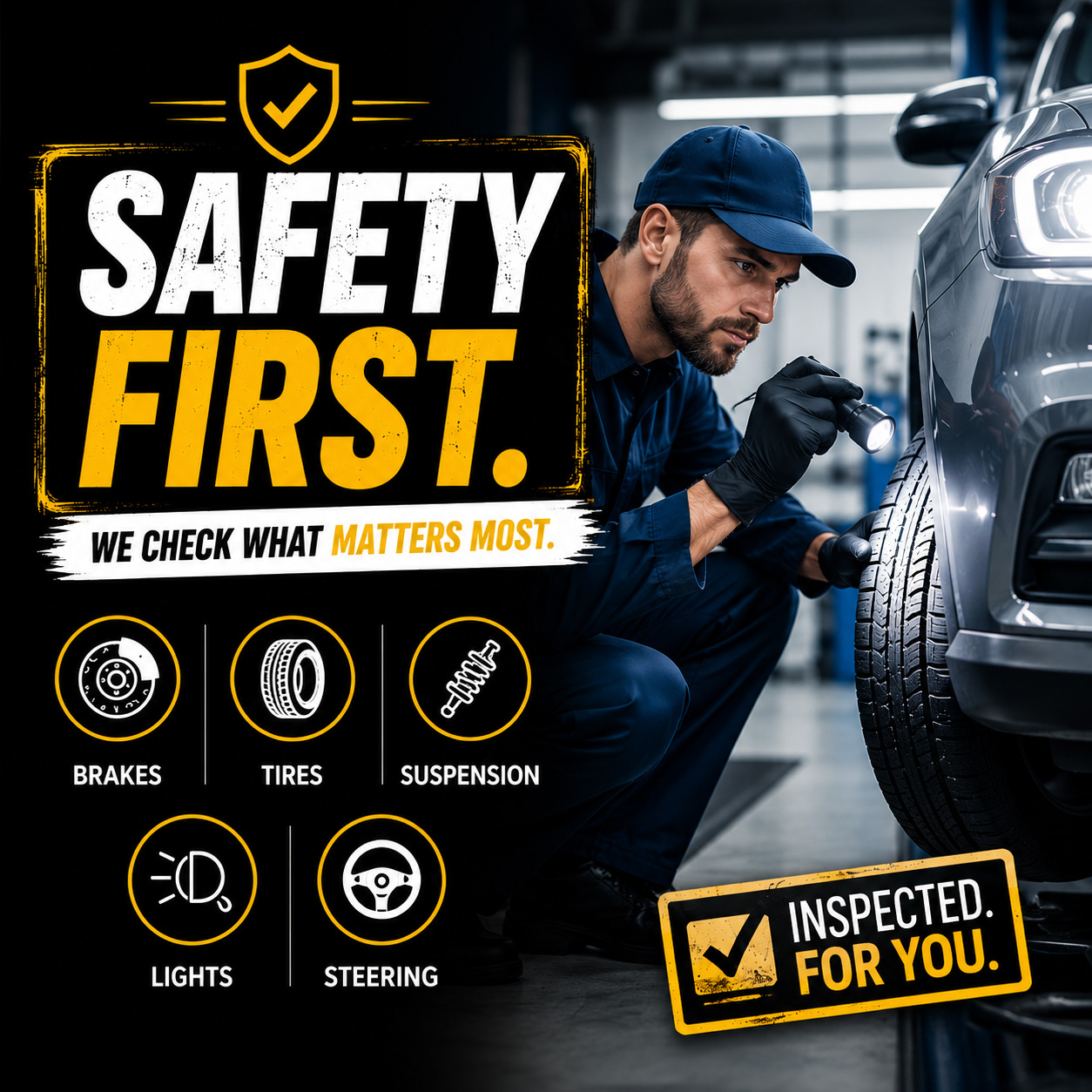
A vehicle safety inspection checks your car’s brake pads, tyres, steering and gears, suspension, lights, and seat belts along with other features which play significant roles in ensuring the safety of driver and other road users.
The inspector, an experienced mechanic who has had proper training, will go through every component, pointing out the one that seems worn-out or faulty, making sure it meets the required standards, and finally, the mechanic will either pass or fail you according to what s/he found. It usually lasts between 30 minutes and an hour, depending on the car and the level of thoroughness needed.
Most individuals will not really worry about a car until a problem surfaces. That is perfectly alright life is hectic and a car that consistently starts up in the morning and takes you from one place to another makes one feel the car is indeed working well. But safety inspection of the vehicle is not so much a matter of whether your car starts up. It’s more of a concern for the parts of your vehicle you don’t think about until their failure typically at the worst moment.
If you’ve never had one done, or you’re just curious what actually happens when your car’s up on the hoist, here’s a rundown of what a mechanic is really looking for.
Brakes Are Always the First Thing Checked
Brakes wear out gradually, which is exactly why so many people don’t notice until there’s a problem. A mechanic will pull the wheels off and measure the pad thickness, check the rotors for scoring or warping, and look at the brake lines for any sign of leaking or corrosion. They’ll also test the handbrake to make sure it’s holding properly.
Here’s the thing — by the time you can hear grinding or feel the pedal go soft, you’re often already past the point where a simple pad replacement will fix it. That’s why this gets checked first. It’s the single biggest safety factor in any inspection.
Tyres Tell a Mechanic More Than You’d Think
Tread depth is the obvious one, but a mechanic is also looking at how evenly the tyre has worn. Uneven wear across the tread usually points to something else going on — wrong tyre pressure, an alignment issue, or worn suspension components. Cracking on the sidewall, bulges, or old age (yes, tyres do have a shelf life even if the tread looks fine) all get flagged too.
Around Cabramatta and Fairfield, a lot of the roads have their fair share of potholes and rough patches, so it’s not unusual to see tyres and suspension parts wearing faster than they should. Worth keeping in mind if you’re doing a lot of local driving.
Steering and Suspension
This is where a mechanic checks for play in the steering wheel, worn ball joints, tie rod ends, and bushes. They’ll usually rock the wheels by hand and listen for clunks or looseness. Shocks and struts get inspected for leaks or fading — if your car’s been bouncing more than settling after a bump, that’s often the giveaway.
Worn suspension doesn’t just make for an uncomfortable ride. It affects how your car handles in an emergency stop or a sudden swerve, which is exactly the kind of situation you don’t want to find out your steering’s not responding the way it should.
Lights, Indicators, and Reflectors
This part’s quick but easy to overlook yourself. Headlights, tail lights, brake lights, indicators, number plate lights, and reversing lights all get tested. A blown bulb is a simple fix, but it’s also one of the more common reasons a car fails an inspection — mostly because people just don’t notice until someone points it out.
Seatbelts, Airbags, and Interior Safety Features
Seatbelts get checked for fraying, proper retraction, and that the buckle clicks in securely. If your car has airbags (and almost every car on the road does these days), the mechanic will check the dashboard warning light isn’t indicating a fault. A lit airbag warning light means the system may not deploy properly in a crash, which obviously defeats the whole purpose of having one.
Underneath the Car
A lot of what gets checked doesn’t involve looking at the outside of the car at all. Mechanics get underneath to check the exhaust system for leaks or rust, look over the fuel lines, and check for any oil or fluid leaks that could point to a bigger issue. Rust and corrosion on the chassis or frame is also something they’ll keep an eye out for, particularly on older vehicles.
Windscreen, Wipers, and Visibility
Chips and cracks in the windscreen, particularly in the driver’s line of sight, are noted. Wiper blades that are cracked or not clearing the glass properly get flagged too — not a big deal on a clear day, but it matters a lot when it’s bucketing down and you can barely see the car in front of you.
Horn and Basic Electrical Checks
Small thing, but it’s on the list. A working horn is a legal requirement and a genuine safety tool when you need to alert another driver in a split second.
Why This All Matters More Than People Realise
These are not just a series of tests carried to catch you or make you work unnecessarily. They are meant to help you since they are based on the fact that each one of the many parts of a car has its way of getting old and most fail without warning. A brake pad, for instance, does not tell you that you need to replace it. A tie rod end certainly would not inform you via text. The only true way of being certain is to have a knowledgeable mechanic or a technician check the car carefully and systematically.
If you are in the neighborhood around Cabramatta, Fairfield, or the bigger area of Mt. Pritchard, you’d better get in the habit of having a periodic check rather than waiting for something to feel wrong or start breaking down. Discovering that a part is already worn down early on is much more likely to be both cheaper and much safer than the alternative: repairing after it has broken on the road.
Getting Your Car Checked
If it’s been a while since your last inspection, or you’ve just got a nagging feeling something’s not quite right, it’s worth booking in sooner rather than later. A proper check doesn’t take long, and it’s a lot easier to fix a small issue now than deal with a bigger one down the track.
FAQ
How often should I get a vehicle safety inspection?
Most experts recommend at least once a year, or before any long road trip. If your car’s used heavily for daily driving or short trips through stop-start traffic, more frequent checks are a good idea.
What’s the difference between a safety inspection and a regular service?
A service focuses on maintenance — oil changes, filters, fluid top-ups. A safety inspection is specifically about identifying anything that could compromise how safely the car can be driven, like worn brakes or steering issues.
Will my car automatically fail if something small is wrong?
Not usually. Mechanics generally separate issues into things that need immediate attention and things worth keeping an eye on. A minor wiper blade issue won’t fail a car the way a brake problem would.
How long does an inspection usually take?
Anywhere from 30 minutes to an hour, depending on the vehicle’s condition and how much needs a closer look.
Can I drive my car if it fails an inspection?
It depends on what’s wrong. Anything brake, steering, or tyre-related should be fixed before you get back on the road. Your mechanic will usually tell you straight away if something’s not safe to drive on.
