
Get Support
02 9822 0155
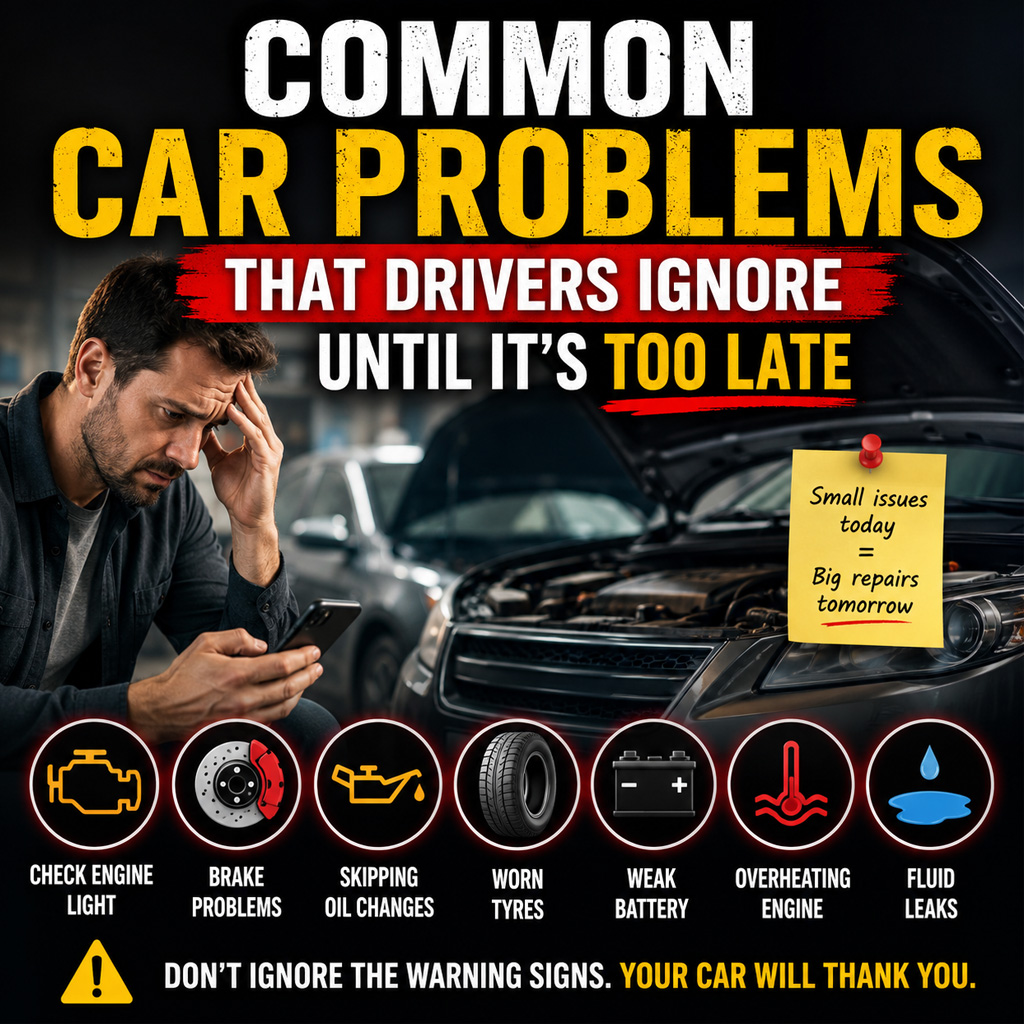
Most car problems don’t show up all at once. They start quietly — a strange sound during the morning drive, a warning light that disappears after a restart, or a tiny vibration that seems harmless at first. Life gets busy, and many drivers convince themselves it can wait another week.
The problem is that cars rarely “fix themselves.” Small issues almost always grow into expensive repairs when ignored for too long.
Here are some of the most common car problems drivers put off until they become serious — and sometimes dangerous.
1. Ignoring the Check Engine Light
Almost every driver has done it at least once. The check engine light comes on, the car still feels fine, so the warning gets ignored.
Sometimes it’s something simple like a loose fuel cap. Other times, it could point to ignition issues, failing sensors, fuel system problems, or even engine damage beginning underneath the surface.
What makes this warning tricky is that the car can still run “normally” for a while. That false sense of security causes many people to delay getting it checked.
Unfortunately, waiting too long can lead to:
- Reduced fuel efficiency
- Poor engine performance
- Damage to the catalytic converter
- Expensive repair bills later
A quick inspection early often costs far less than repairing a major engine issue months later.
2. Strange Noises While Driving
Cars talk constantly. The problem is that drivers often turn up the music instead of listening.
A squealing sound when braking, knocking from the engine, clicking during turns, or humming from the wheels are all warning signs that something is wearing out.
For example:
- Squeaky brakes may mean worn brake pads
- Grinding sounds can indicate metal-on-metal brake damage
- Knocking noises may point to engine trouble
- Wheel humming could mean failing wheel bearings
These sounds rarely disappear on their own. They usually get louder, worse, and more expensive.
3. Delaying Oil Changes
Many people stretch oil changes far beyond the recommended interval because the car “still feels okay.”
Engine oil is what keeps internal parts lubricated and cool. Old or dirty oil loses its effectiveness over time. When that happens, friction increases inside the engine.
That extra heat and wear slowly damages critical components.
Ignoring oil changes can eventually lead to:
- Sludge buildup
- Overheating
- Reduced engine life
- Complete engine failure in severe cases
A relatively cheap oil service can prevent repairs worth thousands later.
4. Vibrations in the Steering Wheel
A shaking steering wheel is never something to ignore.
Some drivers assume it’s just a rough road or poor tyre balance, but vibrations often signal deeper problems.
Possible causes include:
- Unbalanced tyres
- Worn suspension components
- Brake rotor issues
- Alignment problems
- Damaged tyres
If left untreated, these problems can affect handling, tyre wear, and braking performance. In some situations, they can also become serious safety risks at highway speeds.
5. Brakes That “Still Work Fine”
One of the most dangerous habits drivers have is waiting until brakes completely fail before taking action.
Braking problems usually start gradually:
- The pedal feels softer
- The car takes longer to stop
- There’s a squeal or vibration
- The brake warning light appears
Because the change happens slowly, drivers adapt without realizing how much stopping performance they’ve lost.
By the time grinding begins, damage may already extend beyond brake pads to rotors and calipers — significantly increasing repair costs.
More importantly, delayed brake repairs can put lives at risk.
6. Ignoring Fluid Leaks
A few drops under the car may not seem like a big deal, especially if the vehicle still drives normally.
But leaks are often early warnings of mechanical failure.
Different fluids can indicate different issues:
- Green or orange fluid → coolant leak
- Dark brown fluid → engine oil leak
- Red fluid → transmission leak
- Clear fluid → sometimes harmless condensation
Transmission and coolant leaks are especially risky because low fluid levels can destroy major components if ignored.
The earlier leaks are found, the easier and cheaper they usually are to repair.
7. Driving on Worn Tyres
Tyres are easy to overlook because wear happens slowly.
Many drivers don’t notice how bad their tyres have become until they’re driving in heavy rain or suddenly need to brake hard.
Worn tyres reduce:
- Road grip
- Braking performance
- Steering control
- Wet weather safety
Uneven wear can also reveal suspension or alignment problems that may be damaging other parts of the vehicle at the same time.
Replacing tyres at the right time improves both safety and fuel efficiency.
8. Battery Problems That Get Ignored
A weak battery often gives warnings before it dies completely.
You might notice:
- Slow engine cranking
- Dim headlights
- Electrical glitches
- Difficulty starting in the morning
Many drivers wait until the car refuses to start altogether.
The inconvenience usually happens at the worst possible time — before work, during bad weather, or far from home.
Testing a battery early can prevent unexpected breakdowns and avoid getting stranded.
9. Overheating “Just Once”
Some people think a single overheating incident is harmless if the car cools down afterward.
In reality, overheating can seriously damage an engine very quickly.
Possible causes include:
- Low coolant
- Radiator problems
- Faulty thermostat
- Water pump failure
Even one severe overheating event can warp engine components or damage the head gasket.
That small temperature warning should never be ignored.
10. Suspension Problems That Slowly Get Worse
Suspension wear often creeps up gradually.
The ride feels rougher over time, the car leans more during turns, or bumps feel harsher than usual.
Drivers often adjust without realizing how much vehicle control they’ve lost.
Worn suspension parts affect:
- Steering stability
- Braking distance
- Tyre wear
- Overall safety
Ignoring suspension repairs can also cause additional damage to tyres and steering components.
Why Drivers Ignore These Problems
Most people don’t ignore car issues because they don’t care.
Usually it’s because:
- The car still drives
- Repairs seem expensive
- There’s no time for servicing
- The problem feels minor
- The warning disappears temporarily
But small repairs almost always cost less than major breakdowns.
Modern vehicles are good at hiding problems until the damage becomes serious. By then, what could have been a simple fix may turn into a large repair bill.
Conclusion
Cars usually give warning signs long before major failures happen. The key is paying attention early instead of waiting for the problem to become impossible to ignore.
A strange noise, warning light, vibration, or fluid leak might not seem urgent today — but delaying repairs often leads to higher costs, unexpected breakdowns, and safety risks later.
Regular servicing and early inspections don’t just protect your car. They protect your wallet, your time, and everyone riding with you.
